

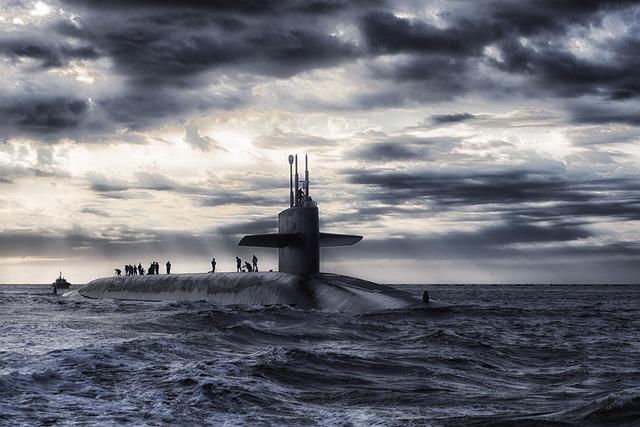
German Submarines Set to Transform Canadian Naval Strength
In a landmark decision to upgrade its underwater defense assets, Canada’s Minister of National Defence, Bill Carney, has confirmed the acquisition of advanced German-built submarines. This strategic procurement aims to replace the Royal Canadian Navy’s aging fleet with vessels that boast superior stealth, endurance, and sensor capabilities. Designed to excel in the challenging environments of the North Atlantic and Arctic, these submarines will significantly enhance Canada’s maritime security posture amid intensifying global naval competition.
Highlights of the selected submarines include:
- Extended mission duration enabling longer deployments without resupply.
- Cutting-edge stealth features that drastically reduce sonar detection risk.
- Air-independent propulsion (AIP) systems for prolonged submerged operations.
- Integrated weapons systems tailored to Canadian naval combat doctrines.
| Specification | German Submarine Model | Operational Benefit |
|---|---|---|
| Length | 73 meters | Optimized for Arctic and North Atlantic navigation |
| Maximum Diving Depth | 250 meters | Enables covert deep-water operations |
| Endurance | Up to 45 days | Supports extended patrols without surfacing |
| Armament | 6 torpedo tubes | Capable of engaging multiple threat types |
Advantages of German Submarine Technology in Strengthening Canada’s Naval Defense
German submarine engineering is globally recognized for its innovation, combining stealth, resilience, and sophisticated combat systems. These submarines employ advanced propulsion technologies that minimize acoustic signatures, enhancing their ability to operate undetected. The modular design and use of premium materials facilitate future upgrades, ensuring the vessels remain effective against emerging maritime threats.
Core technological benefits include:
- Superior stealth: Noise suppression technologies reduce sonar visibility to near-undetectable levels.
- Enhanced sensor suites: State-of-the-art sonar and electronic warfare systems improve threat detection and situational awareness.
- Networked warfare capabilities: Real-time data sharing with allied forces enables coordinated maritime operations.
- Versatile mission profiles: Adaptable for reconnaissance, anti-submarine warfare, and special forces deployment.
| Feature | German Submarines | Other Competitors |
|---|---|---|
| Acoustic Signature | Extremely Low | Moderate to Low |
| Combat System Integration | Fully Integrated | Partial Integration |
| Operational Range | Extended Endurance | Restricted Range |
Impact of Canada’s Submarine Acquisition on International Defense Collaborations
Canada’s choice to procure German submarines represents a strategic pivot towards enhanced underwater warfare capabilities and deeper defense cooperation with Germany. This procurement is expected to foster stronger bilateral ties, opening avenues for joint research, training, and operational exercises. The advanced propulsion and stealth features of these submarines will significantly improve Canada’s ability to secure its maritime borders, particularly in the Arctic, where geopolitical interest is intensifying.
Broader implications for Canada’s defense partnerships include:
- Improved interoperability with NATO allies, facilitating joint maritime missions.
- Expanded industrial collaboration opportunities, including technology transfer and Canadian participation in production.
- Diversification of defense suppliers, reducing reliance on traditional contractors and enhancing strategic autonomy.
| Criteria | Previous Fleet | German Submarine |
|---|---|---|
| Stealth Capability | Moderate | Advanced |
| Operational Range | 3,500 km | 5,000 km |
| Crew Size | 50 personnel | 45 personnel |
| Technology Integration | Basic | State-of-the-art |
Strategies for Effective Integration of German Submarines into Canadian Naval Forces
To maximize the operational benefits of the new German submarines, Canada must implement a comprehensive integration plan. This includes establishing joint training initiatives where Canadian crews collaborate closely with German specialists to master the unique systems and operational procedures. Incorporating advanced simulators into Canadian naval training facilities will provide realistic, risk-free environments for skill development prior to deployment. Additionally, forming a bilateral task force dedicated to sharing maintenance best practices and tactical doctrines will enhance operational efficiency and reduce downtime.
- Technical exchange workshops: To deepen understanding of submarine-specific technologies.
- Cultural and language training: To foster effective communication within multinational crews.
- Tailored logistics systems: To ensure smooth supply chains for parts and upgrades.
- Cyber defense coordination: To safeguard critical communication and control networks.
Operational protocols must also be adapted to the harsh conditions of the North Atlantic and Arctic, including modifications to sonar calibration and hull reinforcement for ice navigation. Implementing a performance monitoring dashboard will allow continuous tracking of training progress, maintenance status, and mission readiness, ensuring the fleet remains at peak capability.
| Integration Focus | Key Activities | Anticipated Benefits |
|---|---|---|
| Training | Simulator exercises and crew exchanges | Improved operational proficiency and alliance interoperability |
| Maintenance | Collaborative workshops and streamlined parts logistics | Minimized downtime and enhanced fleet availability |
| Operational Readiness | Environmental adaptations and cybersecurity measures | Sustained mission effectiveness in extreme conditions |
Looking Ahead: Enhancing Canada’s Naval Future
Minister Bill Carney’s endorsement of German submarines signals a transformative era for Canada’s maritime defense. This acquisition not only upgrades the Royal Canadian Navy’s technological edge but also reflects a strategic response to shifting geopolitical dynamics in the Arctic and North Atlantic. As the integration process unfolds, ongoing updates on delivery schedules and operational deployment will be critical to assessing the full impact of these vessels on Canada’s naval readiness and deterrence capabilities in increasingly contested waters.