


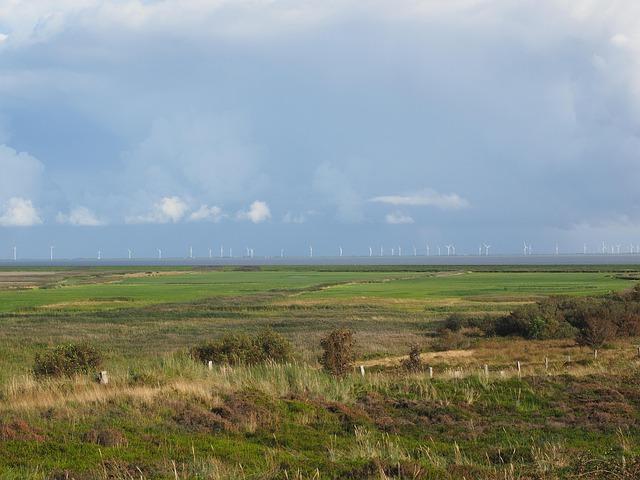
Germany Accelerates Offshore Wind Expansion to 70 GW by 2045
Germany has announced a groundbreaking initiative to boost its offshore wind capacity to an impressive 70 gigawatts (GW) by the year 2045. This ambitious target is a cornerstone of the nation’s broader strategy to transition towards a sustainable, carbon-neutral energy system. By fast-tracking project approvals, enhancing grid infrastructure, and investing in innovative technologies, Germany aims to harness the vast wind resources of the North Sea and Baltic Sea more effectively than ever before.
The plan’s core components include:
- Streamlined regulatory processes to minimize administrative bottlenecks
- Development of floating wind turbines to exploit deeper offshore locations
- Strengthened partnerships with industry players to expand manufacturing and supply chains
- Advanced grid integration using smart energy management systems for stability
| Year | Target Capacity (GW) | Milestone |
|---|---|---|
| 2030 | 30 | Operational large-scale projects and grid enhancements |
| 2038 | 50 | Expansion into floating offshore wind farms |
| 2045 | 70 | Full integration supporting climate neutrality |
Key Strategies to Expedite Offshore Wind Development
To realize the 70 GW offshore wind goal, Germany is focusing on several strategic priorities. Central to this effort is the acceleration of permitting procedures, which have historically slowed project timelines. By fostering closer cooperation between federal and regional authorities, the government aims to reduce red tape and facilitate quicker project launches. Investments in maritime infrastructure, including port upgrades and logistics enhancements, are designed to support the assembly and deployment of large-scale wind turbines with minimal ecological disruption.
Technological advancement is another pillar of the strategy. Germany is prioritizing the modernization of turbine technology and the deployment of floating wind platforms, which enable energy generation in deeper waters previously inaccessible to traditional fixed-bottom turbines. The government is also channeling funds into research and development, alongside digital monitoring tools that optimize construction and operational efficiency. Focus areas include:
- Grid modernization: Enhancing transmission networks and integrating smart grid solutions to accommodate increased offshore inputs.
- Port infrastructure: Expanding and adapting harbors to handle oversized turbine components and streamline logistics.
- Workforce training: Developing specialized programs to equip technicians and engineers with the skills needed for offshore wind projects.
| Focus Area | 2030 Targets | Expected Outcomes |
|---|---|---|
| Permitting Efficiency | Cut approval durations by 40% | Accelerated project delivery |
| Grid Capacity Expansion | Upgrade transmission by 10 GW | Enhanced grid reliability and integration |
| R&D in Floating Wind | Deploy 5 pilot floating farms | Access to deeper offshore wind resources |
Policy Measures to Foster Investment and Innovation
Germany’s offshore wind expansion is supported by a comprehensive policy framework designed to attract capital and stimulate technological progress. Central to this framework are accelerated permitting protocols and regulatory clarity that reduce uncertainties and project risks. The government also offers long-term contracts and financial incentives to provide developers and investors with predictable returns. Environmental stewardship and community involvement remain priorities, ensuring that growth aligns with ecological and social standards.
Beyond financial incentives, the policy environment encourages innovation through partnerships among public agencies, private companies, and research institutions. Emphasis on skills development and modern infrastructure further strengthens the sector’s capacity to meet future demands. Key policy highlights include:
- Defined timelines for expedited approvals
- Stable feed-in tariffs and auction mechanisms to guarantee price certainty
- Tax credits and grants to lower investment barriers
- Dedicated maritime spatial planning to optimize site selection
- Funding for R&D aimed at improving efficiency and reducing costs
| Policy Element | Objective | Projected Impact by 2045 |
|---|---|---|
| Expedited Permitting | Reduce project lead times | 50% faster approvals |
| Financial Incentives | Boost investor confidence | Higher capital inflows |
| R&D Funding | Drive technological innovation | 30% reduction in turbine costs |
Collaborative Efforts Key to Achieving Renewable Energy Targets
Reaching the 70 GW offshore wind milestone demands extensive collaboration among diverse stakeholders. Government agencies, private enterprises, environmental organizations, and local communities must synchronize efforts to streamline development and overcome regulatory hurdles. Emerging tools such as shared data platforms and joint financing models are proving essential in enhancing transparency and minimizing redundant activities, thereby sustaining momentum toward the ambitious goal.
Successful cooperation will depend on integrated policy frameworks that encourage innovation and mitigate risks associated with large-scale infrastructure projects. Stakeholders are exploring approaches including:
- Public-private partnerships to distribute financial risks and pool resources
- Coordinated grid planning to ensure efficient energy transmission and storage solutions
- Community engagement initiatives to foster local support and reduce environmental concerns
| Stakeholder | Function | Benefit |
|---|---|---|
| Government | Policy formulation and regulation | Clear guidelines and incentives |
| Private Sector | Project execution and innovation | Investment and technological advancement |
| Local Communities | Support and social acceptance | Enhanced sustainability and social license |
| Environmental NGOs | Oversight and advocacy | Protection of ecosystems and public interest |
Conclusion: Germany’s Pathway to a Renewable Future
Germany’s commitment to scaling offshore wind capacity to 70 GW by 2045 highlights its leadership in the global clean energy transition. Achieving this target will necessitate continuous investment, cutting-edge innovation, and supportive regulatory frameworks. As the country advances its offshore wind agenda, it is poised to transform its energy landscape and contribute significantly to Europe’s climate goals. Industry observers and policymakers worldwide will be closely monitoring Germany’s progress, which could serve as a blueprint for sustainable energy development on a global scale.


