


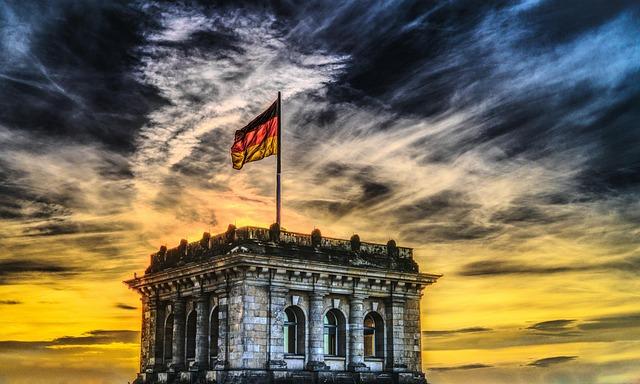
The German far right is on the cusp of a significant breakthrough, signaling a potential shift in the nation’s political landscape. Once relegated to the fringes, these parties and movements are gaining traction amid growing public discontent over immigration, economic challenges, and identity politics. As elections approach, analysts warn that the far right’s rising influence could reshape policymaking in Germany and reverberate across Europe. This article explores the factors driving this surge, the key players involved, and the implications for Germany’s future.
The Rise of Germany’s Far Right and Its Impact on National Politics
The far-right landscape in Germany has expanded significantly, capitalizing on public discontent related to immigration, economic anxiety, and cultural identity. This political shift is evident in the growing influence of parties like the Alternative for Germany (AfD), which have moved beyond fringe status to becoming a significant force in the Bundestag. Their rhetoric, often marked by nationalist and anti-establishment themes, resonates with a diverse voter base increasingly skeptical of traditional parties. This has not only disrupted Germany’s post-war political consensus but also altered the dynamics of coalition-building at the federal and regional levels.
Key factors contributing to this rise include:
- Economic disparities intensified by globalization and pandemic aftermath
- Increased migration flows and ensuing cultural debates
- Growing mistrust in mainstream media and institutions
- Effective grassroots mobilization through social media platforms
| Election Year | Far-Right Vote Share (%) | Seats in Bundestag |
|---|---|---|
| 2013 | 4.7 | 0 |
| 2017 | 12.6 | 94 |
| 2021 | 10.3 | 83 |
As the far right gains parliamentary presence, it pushes mainstream parties to reframe their policies, often shifting public discourse towards more conservative stances on immigration and national identity. This alignment, however, risks polarizing German society further, as concerns mount over civil liberties and democratic resilience. The political landscape is thus in a state of flux, where traditional alliances are being tested and the future trajectory remains uncertain.
Analyzing the Social and Economic Drivers Behind Far-Right Support
The surge in far-right support across Germany is fueled by complex social and economic undercurrents that resonate deeply with disaffected voters. Rising income inequality, particularly in east German regions still recovering from reunification’s economic upheaval, has left many feeling economically marginalized. Coupled with fears over immigration and cultural change, these anxieties have created fertile ground for far-right narratives promising national revival and protection of traditional values. Moreover, a decline in trust toward mainstream political parties has intensified the appeal of alternative voices that claim to represent the “forgotten� segments of society.
Economic stagnation and labor market shifts have further reinforced these dynamics. The persistence of precarious employment and stagnant wages, especially among younger demographics, contrasts sharply with the prosperity enjoyed by urban centers. This disparity has amplified feelings of exclusion and disenfranchisement. Below is an outline of key economic factors correlated with increased far-right support:
- High regional unemployment rates — Linked to loss of industrial jobs
- Lower levels of educational attainment — Correlates with susceptibility to populist messaging
- Income disparity between rural and urban areas — Fuels perceptions of neglect
- Limited social mobility — Heightens frustration and political radicalization
| Factor | Impact on Far-Right Support |
|---|---|
| Unemployment Rate | High rates correlate with stronger far-right votes |
| Education Level | Lower education linked to greater radicalization |
| Urban vs Rural Income | Widening gaps increase political polarization |
| Political Distrust | Declining trust boosts alternative party appeal |
The Role of Media and Online Platforms in Amplifying Far-Right Narratives
Far-right groups in Germany have skillfully harnessed the power of traditional media and digital platforms, transforming them into echo chambers that magnify their narratives. Through provocative headlines and emotionally charged content, these groups gain disproportionate media attention, often framing their messages as urgent responses to national crises. On social media, algorithms inadvertently boost extremist content by prioritizing engagement metrics, allowing divisive and conspiratorial narratives to reach larger audiences seamlessly. This dynamic has facilitated a shift from fringe activism to widespread mainstream discourse, normalizing previously marginalized perspectives.
Key methods employed by these movements include:
- Strategic use of viral videos and memes to appeal to younger demographics
- Exploiting networked communities to disseminate content rapidly across platforms
- Targeted messaging that capitalizes on economic and cultural anxieties
| Platform | Role | Impact |
|---|---|---|
| Community building and targeted ads | Amplifies local chapters and events | |
| Telegram | Encrypted coordination and direct messaging | Maintains private – yet viral – information flow |
| YouTube | Video propaganda and influencer-driven content | Shapes public opinion through long-form narratives |
Strategies for Countering Far-Right Extremism and Protecting Democratic Values
In confronting the rising tide of far-right extremism in Germany, it is imperative to adopt a multi-faceted approach that strengthens the pillars of democratic society. Educational initiatives aimed at fostering critical thinking and historical awareness among youth can act as a bulwark against radicalization. Moreover, collaboration between law enforcement agencies and community organizations is essential to ensure early detection and intervention in extremist networks without undermining civil liberties. Empowering local leaders and marginalized groups to have a voice in democratic processes is a crucial step toward inclusivity and resilience against ideological manipulation.
Policy measures must be coupled with robust public awareness campaigns that dismantle misinformation and promote social cohesion. The following strategies have shown promise in curbing extremist influence:
- Enhanced monitoring: Utilizing technology to track hate speech and extremist content online while respecting privacy laws.
- Support for civil society: Funding initiatives that encourage dialogue and integration across cultural divides.
- Legal reforms: Strengthening penalties for hate crimes and extremist activities without compromising democratic freedoms.
| Strategy | Impact | Key Actors |
|---|---|---|
| Education Programs | Long-term prevention | Schools, NGOs |
| Community Policing | Early intervention | Police, Local Councils |
| Legislative Action | Deterrence | Parliament, Judiciary |
To Conclude
As Germany approaches a critical electoral juncture, the ascendancy of the far right signals a profound shift in the nation’s political landscape. The potential breakthrough of these parties underscores deep-seated social and economic anxieties that traditional parties have struggled to address. Observers caution that the rise of the far right may reshape policy debates and redefine Germany’s role within Europe and beyond. How this momentum will translate into concrete political power remains to be seen, but its implications are sure to reverberate far beyond Germany’s borders.


