

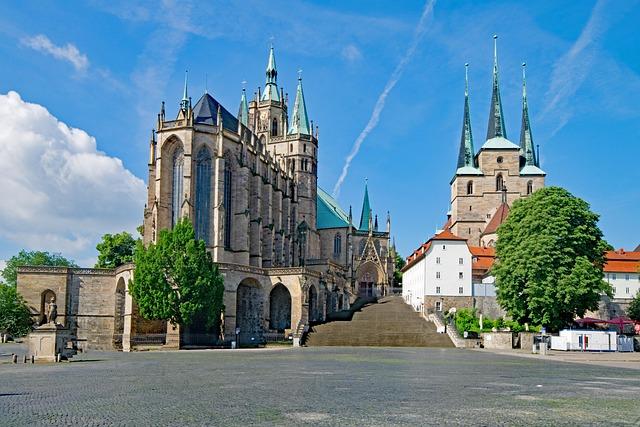
The Alternative for Germany (AfD) party concluded its latest conference in Erfurt this weekend, drawing attention amid ongoing debates about the party’s direction and influence within German politics. The gathering marked a pivotal moment for the right-wing party as members discussed key policy positions and leadership challenges. DW.com provides an in-depth report on the developments and implications of the AfD’s meeting in the Thuringian capital.
AfD Conference Concludes in Erfurt Marking Key Shifts in Party Strategy
The recent gathering in Erfurt saw the AfD’s leadership roll out a refreshed playbook aimed at broadening the party’s appeal beyond its traditional base. Central to the discussion was a shift towards a more socially-focused agenda, addressing issues such as housing, pension reforms, and employment. Party insiders indicated that this realignment is intended to counteract declining support in recent regional polls and to challenge the dominant mainstream parties more effectively.
Key resolutions from the conference include:
- Adoption of a moderation in rhetoric to enlarge voter outreach.
- Strengthening grassroots campaigns through enhanced digital strategies.
- Prioritizing economic concerns over immigration to attract centrist voters.
- Revamping youth programs to engage younger demographics.
| Aspect | Old Position | New Focus |
|---|---|---|
| Rhetoric | Confrontational | Moderate |
| Policy Emphasis | Immigration | Economic and Social Issues |
| Voter Engagement | Traditional Media | Digital & Youth Outreach |
Controversial Policy Proposals and Internal Debates Dominate AfD Agenda
The recent AfD conference in Erfurt was marked by intense discussions over a range of policy proposals that have ignited both support and dissent within the party ranks. Key points of contention revolved around immigration controls, national security, and economic reforms aimed at reshaping Germany’s socio-political landscape. Party leaders put forward bold initiatives including:
- Stricter asylum regulations to curb immigration
- Increased funding for border security operations
- Tax incentives for German-owned small businesses
- Calls for a referendum on EU membership to regain national sovereignty
However, these proposals were met with resistance from some factions concerned about the potential political fallout and the alienation of moderate voters. Internal debates exposed fractures over the party’s direction, with some members pushing for a more hardline stance while others advocated for pragmatic compromises. The conference highlighted the challenge of maintaining unity amid divergent views, as leaders scrambled to balance electoral ambitions with ideological purity.
| Policy Proposal | Support Level | Opposition Concerns |
|---|---|---|
| Stricter asylum regulations | Strong | Risk of international criticism |
| Increased border funding | Moderate | Budgetary constraints |
| Tax incentives for SMEs | Mixed | Potential revenue loss |
| EU membership referendum | Divisive | Economic uncertainty |
Experts Warn of Growing Political Polarization Amid Conference Outcomes
Leading political analysts have expressed concern over the intensified divisions within Germany’s political landscape following the conclusion of the Alternative für Deutschland (AfD) conference in Erfurt. While the party reaffirmed its right-wing populist agenda, several voices from across the political spectrum warn this could deepen societal rifts and hamper national dialogue. Observers note that the rhetoric and resolutions adopted at the conference reflect an ever-more polarized narrative, posing challenges to democratic cohesion.
Key factors driving the escalation of polarization include:
- Heightened nationalist and anti-immigration stances championed during the conference
- The AfD’s growing influence in regional parliaments and its impact on coalition dynamics
- Media portrayal amplifying divisive messaging to broader audiences
| Factor | Impact | Expert Commentary |
|---|---|---|
| Nationalist Rhetoric | Alienates moderate voters | “Increases societal fragmentation,” warns Dr. Meier |
| Parliamentary Presence | Complicates coalition talks | Political scientist Lange calls it “a barrier to consensus” |
| Media Amplification | Broadens ideological divides | Journalist Krause observes “echo chambers deepen” |
Recommendations for Monitoring AfD’s Influence on Germany’s Political Landscape
To effectively track the rising impact of AfD within Germany’s political arena, it is essential to establish multifaceted monitoring strategies. This includes leveraging real-time social media analytics to capture shifts in public sentiment and mapping AfD-related discourse in various digital and traditional media outlets. Additionally, collaborating with political scientists and local observers can provide qualitative insights into changes within AfD’s grassroots networks and alliances. Keeping an eye on regional election results beyond federal votes also offers important indicators of the party’s evolving influence.
Policy makers and analysts should prioritize transparent data-sharing platforms that enable the public and stakeholders to access up-to-date information on AfD’s activities. The table below outlines critical surveillance areas and recommended tools to streamline this process:
| Focus Area | Monitoring Tool | Expected Outcome |
|---|---|---|
| Social Media Trends | AI Sentiment Analysis Software | Early detection of narrative shifts |
| Election Data | Interactive Voting Database | Detailed voting pattern insights |
| Local Party Dynamics | Field Reports & Surveys | Understanding grassroots support |
| Media Coverage | Automated News Aggregators | Comprehensive monitoring of public messaging |
Insights and Conclusions
As the Alternative for Germany (AfD) conference concludes in Erfurt, the party’s future direction and internal dynamics remain under close scrutiny from both supporters and critics. The outcomes of the three-day gathering will likely influence Germany’s political landscape in the months ahead, as the AfD continues to assert its presence on the national stage. Observers will be watching closely to see how the party navigates the challenges of expanding its base while managing internal divisions. For more updates on German politics and current affairs, stay tuned to DW.com.